What is a self-directed IRA?
A self-directed IRA is a type of traditional or Roth IRA, which means it allows you to save for retirement on a tax-advantaged basis and has the same IRA contribution limits. The difference between self-directed and other IRAs is solely the types of assets you own in the account.
Understanding a self-directed IRA (SDIRA)
Regular IRAs typically house only stocks, bonds, mutual funds, and other relatively common investments. Self-directed IRAs offer many more possibilities. For example, you could invest in real estate or a privately held company. You would just need to find a custodian to agree to the deal, then you’re good to go. (With an IRA, you need a custodian or trustee to hold the account for you.)
A self-directed Individual Retirement Account (SDIRA) allows investors to hold a vast array of alternative investments such as real estate, precious metals, and other assets that are normally not allowed for traditional IRA accounts. Aside from that, they tend to work similarly to regular IRA accounts or Roth IRA.
The individuals who may be interested in this account include investment-savvy people who want to have more control over their retirement and probably bigger returns. However, while it gives more freedom to account owners, it also possesses more risks and complications attached to it.
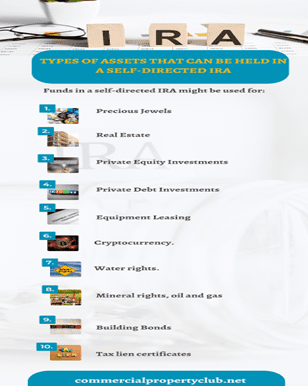
Investments that can be made inside of a self-directed IRA include:
- Passive interest in business partnerships
- A peer lending portfolio
- Real estate or land
- Bridge loans and mineral rights leases
- Tax liens
- Gold or other precious metals
- Crypto-currencies
- Individual stocks
- Life settlement funds (which purchase life insurance policies from seniors who no longer want or need them)
How to Open an SDIRA
If you want to open a self-directed IRA, you’ll need a qualified IRA custodian that specializes in that type of account. Not every SDIRA custodian offers the same range of investments. So, if you’re interested in a specific asset, such as gold bullion, make sure it’s part of a potential custodian’s offerings.
Remember that SDIRAs are self-directed, which means that custodians aren’t allowed to give financial advice. As such, traditional brokerages, banks, and investment companies usually don’t offer them to their clients. This means that you need to do your own homework. If you need help picking or managing your investments, you should plan on working with a financial advisor.
- You need to research the market and pick a company.
Most IRA providers only offer the regular options, so we need a special custodian. We should research what investments are allowed before signing the contract. It is always best to pick a reputable firm that works the best for one.
- You should be aware of the documents that an accountant may ask for.
It includes the full name, address, Social Security Number (SSN), and sometimes bank or credit card information. In all cases, we should check with the company for the necessary requirements, as they may change between different firms.
- Visit the company’s website or one of its offices and apply for the self-directed IRA.
Many companies have provisions for online processing, and one can fill in the requirements in only a few minutes. It is best to never send any information online unless one is 100% sure about a company’s reputation.
- Then decide on the method to fund the account.
IRAs work better when a person deposits a reasonable amount every month, so we need to set up a method that allows recurring payments.
Self-Directed IRA Rules You Should Never Break
Breaking the rules can result in severe tax consequences. Whenever you are unsure of a transaction or situation, always consult with a tax or financial advisor before you act to get clarification. Here are the main rules that you should remember when engaging in a transaction with your self-directed account.
1. Personal Benefit
The IRA investor cannot use the self-directed IRA for personal benefit. For example, rental income from an investment property owned by the IRA must be deposited in the IRA account and not in a personal account. All income from IRA assets must be put back in the IRA.
2. Disallowed Investments
The IRA investor cannot invest in disallowed assets per IRS rules for retirement accounts. Disallowed IRA assets or investments are explained further below.
3. Disqualified Persons
The IRA investor or his or her beneficiaries cannot engage in a transaction with a disqualified person. These persons are listed below. When you break this rule, your IRA is no longer an IRA and it loses its tax benefits.
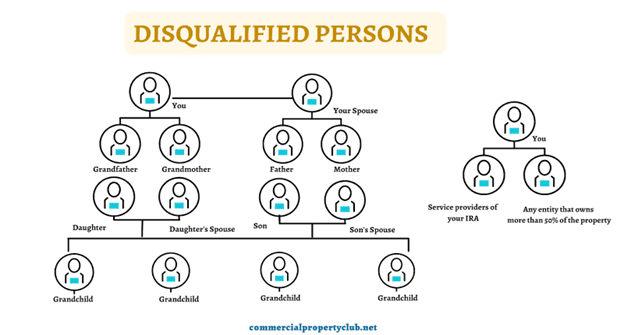
Disqualified Persons are people or entities that cannot do any direct or indirect deals, investments, or transactions with the IRA.
Self-Directed IRA Benefits
People generally seek out self-directed IRAs for two main reasons: to pursue higher returns or to diversify their retirement savings outside of more traditional assets.
- Potential for Higher Returns
Investment flexibility is the main advantage of self-directed IRAs. In a self-directed IRA, you can invest in alternative investments, such as commercial property or LLC membership interest, which are not permissible in a traditional IRA held by a brokerage company. You can also put your retirement money into high-risk, high-reward assets like Bitcoin and early-stage private companies. These sorts of assets may have returns higher than you could get investing in just the stock market, but they also involve much higher risks.
- Increased Diversification
Many retirees and soon-to-be retirees are concerned about market volatility and inflation decimating their lives’ savings. For them, the ability to invest in alternative investments means they may be able to guard against downturns or time eating away the value of their money.
Investing in gold, for example, has long been viewed as a way to protect your portfolio against market downturns and inflation. While this is the popular perception and does to an extent bear out over the very long term, in the short term, gold historically has been just as volatile as stocks. Safe haven assets like gold and now cryptocurrency may help diversify your portfolio, but they offer no guarantees against loss.
- Tax advantages.
As with other traditional and Roth IRAs, self-directed IRAs (traditional or Roth) will either allow you to defer taxes in a self-directed traditional IRA or avoid taxes on investment gains when investing with after-tax dollars in a self-directed Roth IRA.
- Creditor protection.
As with other IRAs, self-directed IRAs can protect assets from creditors under bankruptcy law often up to one million dollars. However, the protection varies from state to state, so be sure to research the rules in your state.
Self-Directed IRA Disadvantages and Risks
While self-directed IRAs can make sense for some savvy investors, they carry greater risks and downsides than standard IRAs.
- Less Liquidity
Because you’re investing in alternative assets like real estate and physical gold, it can take much longer to sell your holdings when you need the money. Even if you are able to sell quickly, you may have to accept much less than the market value or even what you paid for them originally. These securities are highly liquid, meaning you stand a better chance of being able to sell them quickly when you need money.
- Fees
You can generally invest in an IRA without paying account management or trading fees. Depending on where you hold your self-directed IRA, though, you may owe account-related fees as well as fees based on the assets you invest in. With gold, for example, you may be charged maintenance fees, storage fees, and insurance fees, just to name a few. Make sure you’re fully aware of any charges you may incur as a result of investing with a self-directed IRA.
- More Limited Protections
Self-directed IRA custodians typically are only responsible for administering and holding the assets. They are not liable for investigating the quality or legitimacy of the investment options in the IRAs they offer. This means, for example, that you might end up buying gold or another precious metal from a third party that does not meet the purity standards to be held in your IRA, which can cost you not only the money you lose on a fraudulent purchase but also from the tax penalties you incur.
How to Open a Self-Directed IRA
1. Find a Custodian
Self-directed IRA custodians can be banks, trust companies, or other entities approved by the IRS. Be sure to check potential custodians’ reviews and look for any complaints filed with federal agencies.
2. Choose What Investment to Invest In.
Once you figure out where you want to open a self-directed IRA, you can determine which alternative investments you want to purchase. When you’ve settled on your alternative asset classes, you may need to locate a reputable dealer to buy from, especially if your custodian doesn’t have already established partnerships.
3. Complete the Transaction
Once you’ve found your custodian and dealer, you can instruct your custodian to purchase your investments from your dealer.
4. When the Time Comes, Plan Your Withdrawals
Self-directed IRAs are subject to the same withdrawal rules as other IRAs: You’ll owe taxes on any money that hasn’t been taxed before, except for earnings in a Roth account. If you make a withdrawal before you are 59½, you’ll also owe a 10% IRS penalty. Self-directed traditional IRAs are subject to required minimum distribution (RMD) rules, meaning you’ll have to start withdrawing money from your account once you turn 72.
As informed investors we should understand the risks associated with real estate investing and that there is no guarantee. Please do your due diligence.
What is a self directed IRA?
What are the investments that can be made inside a self-directed IRA?
- Passive interest in business partnerships
- A peer lending portfolio
- Real estate or land
- Bridge loans and mineral rights leases
- Tax liens
- Gold or other precious metals
- Crypto-currencies
- Individual stocks
- Life settlement funds (which purchase life insurance policies from seniors who no longer want or need them)