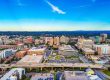
Austin’s rapidly expanding economic industry is driving more people into the city which is increasing the housing demand. A number of reasons have affected the present situation of the Austin housing market, one of which is the high migration of firms and persons relocating to the city from Texas and out-of-state, which has led to a robust and varied economy that attracts people seeking opportunity. A surge of people moving in, combined with rapid population growth and low mortgage interest rates, has turned Austin and its surrounding area into a sellers’ market.
Despite cooling off from its peak. Austin will remain a seller’s market despite nationwide inflation and rising interest rates. The prices continue to rise across Austin MSA. The main reason is strong in-migration and a rapidly recovering local economy. According to the Census Bureau’s 2021 population estimates, Austin’s population is increasing by 146 people every day. This type of expansion places immediate and substantial demands on infrastructure, especially housing.
Population Growth
Austin is the fastest-growing major metropolitan area in the U.S., with the population surging by 34% since 2010. Over the past decade, Austin had a net gain of over 579,000 new residents, averaging 184 new residents each day. According to a report from the Austin Chamber, many new Austinites have relocated from Silicon Valley, attracted by the tech opportunities in the region. Lower taxes, fewer business regulations, and a lower cost of living help to make Austin a magnet for tech companies and digital nomads.
Key population stats:
The city of Austin is home to nearly 962,000 residents with over 2.2 million people residing in the Austin-Round Rock metropolitan area. Between 2010 and 2020, the City of Austin gained nearly 171,465 new residents, according to the U.S. Census Bureau. The population of metro Austin has increased by 2.7% year-over-year and by 34% since 2010.
Austin is located in Travis County and is the 2nd most populated capital city in the U.S., right behind Phoenix. Austin remains one of the top destinations for migrating talent, and first among the top 50 largest metro areas for new residents as a percentage of the total population. By 2050 the population of the Austin MSA is projected to more than double in size to more than 4.5 million residents.
Employment
Austin ranks as the 3rd best-performing metro for employment growth in the U.S. Since 2021, Austin-Round Rock has gained more than 90,000 new jobs since 2021 for a job growth rate of 8%. According to the Wall Street Journal, many new residents are “coastal émigrés” drawn by the region’s burgeoning tech industry, lack of state personal income tax, and laid-back atmosphere.
Austin is one of the few metros that has managed to recover jobs lost during the pandemic. The unemployment rate stood at 2.9% in December, surpassing both the state (5.0%) and the U.S. (3.9%) averages. The job market posted a 7.4% expansion, or 85,800 jobs, in the 12 months ending in November, outperforming the 4.6% national rate. Professional and business services led growth (29,900 jobs), sustained by the plethora of tech firms that moved into the metro.
Key employment stats:
The GDP of Austin-Round Rock is over $168 billion, according to the Federal Reserve Bank of St. Louis, and has grown by over 85% in the last ten years. Job growth in Austin was 8% between Mar. 2021 and Mar. 2022. The unemployment rate in the Austin metro area was 2.5% as of April 2022, according to the BLS. Target industry sectors in Austin include advanced manufacturing, creative and digital media, clean technology, life sciences, space technology, and data management.
Companies with corporate or regional headquarters in Austin include AMD, Apple, Dell, Cirrus Logic, Home Depot, Legal Zoom, Oracle, and Vrbo. Apple, Amazon, Cisco Systems, eBay, PayPal, Facebook, Google, HomeAway, and Xerox are just a few of the many high-tech companies with operations in Austin, helping the metro area earn the nickname Silicon Hills.
Major employers in the Austin metropolitan area include Apple, Ascension Seton healthcare headquarters, Austin Independent School District, the City of Austin, the Federal Government, the State of Texas, and Samsung Austin Semiconductor. The University of Texas at Austin, Austin Community College, and Concordia University are three of the major universities and colleges in Austin. 90% of the Austin residents have a high school degree or higher, while 46% hold a bachelor’s degree or advanced degree.
Interstate highways I-10, I-35, and SR-130 put Houston, San Antonio, and Dallas less than a three-hour drive from Austin. Burlington Northern Santa Fe Railway and Union Pacific Railroad are two of the freight rail lines serving Metro Austin. Austin is within 250 miles or less of the top U.S. ports in Houston, Beaumont, Corpus Christi, and Texas City. Austin-Bergstrom International Airport (ABIA) serves nearly 16 million passengers with nonstop service to more than 70 national and international destinations, and last year handled 182.5 million pounds of air cargo shipments.

Housing
Austin’s housing market is shaping up to continue the trend of the last few years as one of the hottest markets in the nation. Austin’s engine of job and population growth is not projected to slow down anytime soon as it has the biggest drivers of commercial and residential real estate demand. Its economy has diversified and strengthened over the past two decades.
Companies like Google and Tesla are moving operations to Austin. The software giant Oracle has also relocated its headquarters here. As more companies move here, that means more people looking for homes, and the city is also attractive to outside investors. With a steady influx of job creation in the pipeline, the housing market will continue to post strong numbers well into 2022. Big companies moving here will also play into what happens to the housing market.
With an all-time high in corporate relocations, the housing demand is way up and the supply side cannot match up. All these factors indicate that this region has a higher probability of withstanding economic downturns.
Real Estate Market
According to a report from KVUE, the region’s strong in-migration and rapidly recovering economy are 2 of the many reasons why the demand for housing in Austin is so high. As one local public policy expert observes, “When the lowest inventory on record is factored into the mix, it’s clear that price pressures are unlikely to ease any time soon.”
The most recent report from the Austin Board of Realtors (ABOR, May 2022) reveals that median sales prices have skyrocketed 19% year-over-year, and average days on market are down to 15 days, with only 1.2 months of inventory on the market.
Key market stats:
Zillow Home Value Index (ZHVI) for Austin is $686,669 through May 2022. Home values in Austin have increased by 29.4% over the last year. Over the past five years, home values in Austin have increased by 99%. The median sales price for a home in Austin is $550,000 based on the most recent report from the Austin Board of Realtors. Sales prices for homes in Austin have increased by 19% year-over-year.
The average days on the market for a home in Austin is 15. Months of inventory in the Austin real estate market is just 0.8 months, which means there is about a 5-week supply of homes for sale in the Austin metropolitan area. Of the 83 neighborhoods in Austin, Realtor.com reports that Tarrytown is the most expensive with a median listing price of $2.3 million. The most affordable neighborhood to buy a home in Austin is West University where the median listing price is $375,000.
Rent growth mirrors the robust demand, up 0.6% on a T3 basis through January, to $1,694, as does the occupancy rate in stabilized properties, up 230 basis points year-over-year through December, to 95.8%.
With several billion-dollar projects underway, Austin has strong prospects for sustained economic expansion. Developers delivered 1,075 units in January 2022 and had 37,813 units under construction, continuing the accelerated pace of deliveries, which last year marked the best level of the decade. Multifamily sales recorded a new high of $4.3 billion in 2021.
Quality of Life
Austin’s booming job market, plentiful nightlife options, diverse dining scene, and outdoor experiences are some of the reasons why socially active professionals are flocking to the capital city of Texas.
The key quality of Life stats:
Austin is ranked as one of the best places to live in the U.S. in 2022 by U.S. News & World Report. Forbes lists Austin as the 8th best place for business and careers, the 9th best place for job growth, and the 16th best place for education. Austin receives an “A” grade from Niche.com with top-of-the-class grades for public schools, nightlife, and outdoor activities.
The music scene in Austin is second to none, earning the city the nickname the “Live Music Capital of the World.” WalletHub lists Austin as one of the 5 best places in the U.S. to find a job.
The climate in Austin is humid subtropical with very long and hot summers and short mild winters.
There’s always something to do in Austin, such as music festivals, Hill Country wine tastings, motorsports, outdoors and nightlife, and sports. Pro sports teams in Austin include the Round Rock Express for baseball, Austin Spurs for basketball, and the AHL’s Texas Stars. St. David’s Medical Center and Ascension Seton Medical Center Austin are two of the best hospitals in Austin, Texas.
As informed investors we should understand the risks associated with real estate investing and that there is no guarantee. Please do your due diligence.