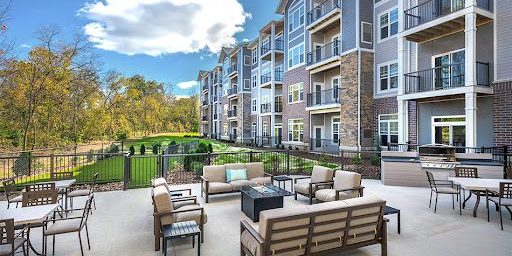
Investors now have the chance to profit from expansion in the senior housing market as more baby boomers retire. Senior housing differs from other types of specialist real estate in a number of distinctive ways, despite comparisons in the business to hotels and multi-family projects. When adopting risk management measures to lessen the investor’s exposure to the tort liability that might result from managing a senior housing facility, investors in this market, along with their attorneys and consultants, must be aware of the different state requirements. In order to succeed in the senior housing market, investors need to keep a number of key factors in mind, as this essay highlights.
How Investors Do Mergers And Acquisitions In Senior Living Housing.
Real estate investment trusts (REITs), private funds, pension funds, family offices, high-net-worth individuals, and retail investors are just a few of the many different types of investors that can be found in the senior housing sector. Even while certain investors may not be suited for the operational risks involved in running a senior home facility, many of those risks can be reduced by separating the real estate assets of the facility from its operations.
 The majority of investors accomplish this separation by splitting off the facility’s ownership and management between the property owner (PropCo) and the operator (OpCo). The only assets of the PropCo under this ownership arrangement are the facility’s real estate assets, which it rents to the OpCo to manage the facility’s operations. The investor is better able to protect PropCo’s assets against claims made against OpCo resulting from the facility’s operations by isolating the facility’s operations from the ownership of the assets.
By having OpCo enter into a management agreement with a third-party management company (a Manager), who will be in charge of the facility’s day-to-day operations and performance as part of the agreement, investors are further able to reduce the operational risks connected with operating a senior housing facility. As a result, managers may assist carry some of the operational risks involved in running a senior home facility while providing knowledge that an investor new to the business would not yet have. Managers frequently have regional experience in the administration of senior housing facilities.

Choose from the Different Acquisition Forms
Investors that want to buy an existing senior home facility rather than create one have several alternatives for structuring the deal. The investor has three options: (1) buy the seller’s whole shares through a stock purchase; (2) buy some of the seller’s assets through an asset purchase; or (3) combine or form a strategic partnership with an already-existing company in the senior housing sector. The most frequent of them are stock and asset purchases.
-
Stock acquisitions
A type of transaction that is often only open to sellers who are in it for the money is buying stocks. The advantage of a stock acquisition is that since the seller’s business will continue to exist after the transaction is through, the seller can preserve the provider numbers it now uses to run the facility. The seller entity’s retention of provider numbers guarantees that the facility will continue to receive payments from public and private payor programs, which lowers the amount of working capital required to complete the deal.
In contrast, a stock purchase transaction results in the buyer taking on both the senior home facility’s assets and liabilities. A stock acquisition transaction may give rise to state regulatory and tort responsibility according to the nature of the business for activities that were taken while the seller was in control before the transaction’s completion.
-
Asset acquisitions
The majority of transactions are set up as asset acquisitions since doing so enables the investor to both to purchase the seller’s assets as well as specifically choose which liabilities, if any, it will take on. Liabilities that are frequently omitted include pre-closing litigation, liability claims, and third-party contracts with unfavorable conditions.
The main issue with an asset purchase transaction is that the investor must obtain not only a new state license but also new Medicare and Medicaid provider numbers, which can result in the loss of certain grandfathered exceptions that the seller enjoyed and can delay or even prevent the closing of the transaction if the purchaser does not get approved. A payment gap may occur while new provider numbers are being acquired if it becomes necessary to obtain new provider numbers.
-
Strategic Partnerships and Mergers
Mergers can be advantageous since they give an investor the chance to smoothly acquire an established senior home firm along with the knowledge and perspective licenses that go with it, unlike when buying stock. Yet, because all of the assets and liabilities of the combined firm must be assumed, mergers typically lack the allure of an asset purchase.
Similar benefits may be derived via strategic partnerships, especially when an investor decides to collaborate with a well-established company in the senior housing sector and thereby gains access to that company’s knowledge. However, a partnership carries the danger of joint and several responsibilities of the partners for the activities of the others, as is the case with strategic partnerships in any other field, and as such, can be a riskier way to engage in the senior home market.
CONCLUSION
For both new and seasoned investors, the senior housing market offers an exciting chance to participate in the expanding retirement business. Investors who keep a few important factors in mind can increase their chances of success in the senior housing market in addition to working with attorneys and financial consultants with relevant knowledge.
Starting, investors can reduce some of the risks related to their investment by dividing the ownership of the senior living facility into the liabilities related to operating the facility by vesting ownership and operating duties in two different organizations.
Both the OpCo and the PropCo. Investors should also take into account, if required or cost-effective, hiring a management firm with experience running a senior living facility to make up for any knowledge or resource gaps they may have.
Investors should decide whether their firm or the Manager is the most suitable entity to hold the facility’s operating license and take care to comply with the applicable licensing and regulatory requirements of the state in which the facility is located. Investors should analyze all the benefits and drawbacks of each method of acquisition before choosing one. They should also take into account their unique risk management requirements as well as the levels of knowledge and resource synergies that are most likely to ensure their success.
Finally, it’s crucial to keep in mind the differences between drafting asset purchase, lease, management, and resident agreements for a senior housing facility and other types of specialty real estate, including the necessity of planning for particular types of operational risks and ensuring compliance with relevant state regulations.
As informed investors, we should understand the risks associated with real estate investing and that there is no guarantee. Please do your due diligence.