
Despite some encouraging news concerning a decline in U.S. rent costs in August, the long-term prognosis is still not encouraging.
According to the most recent statistics from Realtor.com, the median rent in the 50 largest cities in the country decreased by $10 per month last month, marking the first price decrease since November.
A one-month price fall, however, doesn’t always signal the beginning of a long-term trend. In fact, it’s probable that rent price increases will continue to be high long beyond 2023.
Due to increased house ownership prices—particularly with mortgage payments nearly tripling since January—rental demand will continue to be high, according to Hale. This has compelled a lot of prospective homeowners to remain in the rental market, increasing the already strong demand. Another issue is persistent housing scarcity.
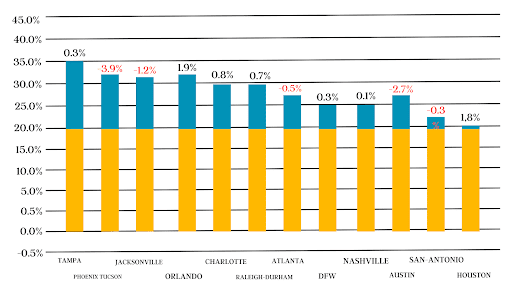
Figure A, Showing Rent Growth Since The Pandemic As Of April 2023
In 2023, anticipate above-average rent price growth.
Using information from the federal government’s consumer price index, the Federal Reserve Bank of Dallas forecasts that the annual growth in rental prices would increase from 5.8% in June 2022 to 8.4% in May 2023.
Similarly, Thomas LaSalvia, director of economic research at the financial analytics company, forecasts a rent growth rate of 5% to 7% during that same period in a forthcoming Moody’s Analytics prediction. Annualized rent price increases were between 4% and 5% prior to the Covid epidemic, he claims.
In order for the Fed to get inflation back into its target range in the next six months, interest rates are expected to need to increase, according to LaSalvia. “And as a result, mortgage rates will remain fairly high.”
Fortunately for renters, Moody’s anticipates a slowdown in price increase in the second half of 2023, pending a decrease in the cost of mortgage borrowing.
There’s also a belief that the Fed would change course and stop raising interest rates once inflation starts to decline, which would ease some of the pressure on the mortgage market.
Hale from Realtor.com says tenants should be prepared to pay extra in the meantime. If it’s affordable, tenants might wish to extend their current lease to save money. She suggests that tenants can look at renting in the suburbs, where rent growth has been less than in cities.
Finally, given that studio apartments have experienced faster price increase than one- or two-bedroom apartments, renters may be able to save money by sharing a bigger apartment with someone else.
Waves of economic activity from the pandemic era are still influencing rental growth trends in our post-pandemic multifamily environment. Five of the 12 cities we service have had negative rent growth over the past year and all of the markets we serve are now moving below their long-term averages.
The annualized rent rise since 2020 is shown in Figure A. The figure in the blue portion at the bottom of each bar indicates 2020 when rent growth was restrained owing to the onset of the pandemic and economic lockdown circumstances. Due to the economic reopening that drove up rents, the orange portion of each bar represents growth in 2021. The top grey area of each bar indicates a 2022 rent increase when rents were supposed to fall to long-term norms but remained elevated far beyond predicted levels. The most recent trends as of the end of April are shown by the values lingering over each bar’s top.
Trends to Watch in 2023
- Migration Trends: The Sun Belt continues to dominate in population
growth, with more than 400,000 additional inhabitants in both Texas and Florida in 2022, according to the U.S. Census. Household formation is a result of population increase, and demand for multifamily housing follows.
- Mortgage Costs: Although rates decreased marginally by year’s end from highs
north of 7% in November, many purchasers find the cost of a 30-year mortgage to be exorbitant, which slows down house sales.
- Affordability: Rents have increased significantly in most cities throughout the
nation, placing a strain on renters’ finances. According to a recent study cited by Bloomberg, a sizable percentage of Millennials returned to living with their families in the previous year in an effort to save money and because they were unable to pay their rent. Owners of multifamily properties have seen a stagnation in household formation.
- Capital Flows: Multifamily has dominated U.S. sales volume for eight years in a
row thanks to declining mortgage rates. Multifamily continues to be a top target for investors, although slower sales are being caused by rising borrowing rates. The amount of overall sales will depend significantly on how quickly and how much the price moves.
What This Means For 2023
2023 is proving to be a challenging year as rent growth has turned negative in five markets and remains very flat in the rest. Although the negative-to-flat trajectory of these trends is alarming, we may yet witness the regular seasonal pivot when demand improves from now through July. However, pandemic-induced oscillations are likely to continue sending shock waves across the established seasonal patterns we have learned to expect. Stay tuned as we continue this series with updated reporting on market conditions for 2023.
As informed investors, we should understand the risks associated with real estate investing and that there is no guarantee. Please do your due diligence.