
Cash-on-cash return, also known as cash yield or the equity dividend rate, is a yearly measurement of a real estate investor’s earnings on a property compared to the amount the investor initially paid to buy and put it into a property purchase. It is frequently abbreviated as CoC return.
This formula might be helpful when comparing money coming in and going out, or attempting to gain a clear picture of cash flow. This is crucial if you have a choice in financing and want to know how much money to put down and the size of the loan you should take out. It’s simple to measure profitability when expressed as a percentage, so you can use it to compare investments in real estate quickly.
How To Determine The Cash-On-Cash Return
The following is the formula for calculating cash-on-cash return:
“Annual Cash Flow / Initial Cash Outlay x 100% is the formula for Cash On Cash Return”
If you don’t already know your yearly cash flow, the processes for determining cash on cash return might be a little complicated. This calculator shows how much rental revenue you will still receive after all costs have been covered. Some typical recurring costs that will affect estimates are listed below:
- Mortgage
- Property taxes and insurance
- Maintenance costs
- Utilities
- Property management fees
- Vacancy rate
- HOA fees (if applicable)
The most effective technique to figure out your return is to create an itemized breakdown of your monthly rental income and costs. This enables you to figure out your monthly and yearly cash flow, which are figures you must have before using the equation. You must project your figures as accurately as you can if you’re utilizing this method in your transaction analysis. Here is a reference on effectively assessing your rental property costs in case you need some assistance with this stage.
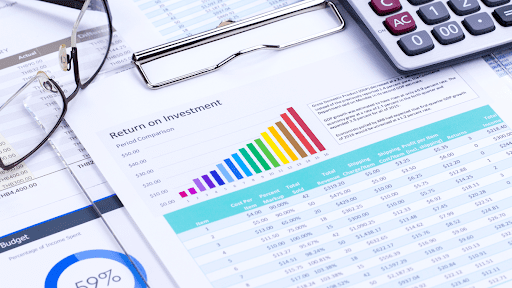
Cash On Cash Returns Vs Other Metrics In Commercial Real Estate Investments.
- Cash On Cash Vs. ROI
Although the phrases cash on cash return (CoC) and return on investment (ROI) are sometimes used interchangeably by investors, they are not the same. ROI examines returns on the entire investment, including loans you took to fund the acquisition, whereas cash on cash examines returns in relation to any money paid out of pocket.
As was already noted, figuring out ROI for a rental property can be a bit challenging because it usually gauges returns based on the future sale price of a property. However, there may be ways to avoid figuring out ROI for a rental property.
- Cash On Cash Return Vs. NOI
Cash on Cash Return is computed differently from NOI, or net operating income. The primary distinction between the two is that although NOI disregards debt services, cash-on-cash return does. Your anticipated NOI may be calculated by deducting property running costs from the total revenue that a property will produce when fully leased out. Maintenance, utilities, and landscaping are all part of operating costs.
- Cash On Cash Return Vs. IRR
By examining the whole holding time, the internal rate of return, or IRR, is used to assess the prospective profitability of an investment. Total cash flow, upfront investment costs, and a projected holding duration are used to calculate IRR. Contrarily, cash on cash return solely considers profitability with respect to the initial investment. The whole ownership duration of the investment is not considered in cash on cash return.
- Cash On Cash Return Vs. Cap Rate
The capitalization rate formula is an additional tool for estimating an investment’s future profitability, although it uses variables other than cash on cash returns. By dividing the net operating income by the market value of the asset, one may get the cap rate. The resultant figure can be converted to a percentage before being compared between several properties in the same neighborhood.
Cash on cash returns takes investment amount into account rather than market value. Cash on cash returns may provide investors a deeper look at the prospective profits while cap rate can assist investors in choosing between potential ventures in the same sector.
How and Why Are Cash on Cash Returns Important?
When determining if a purchase has the potential to be profitable, cash-on-cash returns are crucial. This technique may be a wonderful approach to forecast the performance of an investment and eventually assist you in deciding whether to make one. If you are deciding between a regular mortgage and a private lender, cash-on-cash returns can help investors choose the best financing option. The approach that will allow you to optimize your yearly returns may be shown by the cash-on-cash returns formula.

What Constitutes a Good Return on Cash?
For individuals who are unsure of what makes a decent return rate, there is no set formula. Investors appear to concur that an investment is worthwhile if the predicted cash-on-cash return ranges from 8 to 12 percent.
However, contend that in some markets even 5 to 7 percent is appropriate. Beginner investors could set lower initial requirements for cash-on-cash returns before raising them as they acquire experience and become more knowledgeable about what to look for in a rental property.
What your investing goals are should also be taken into account when analyzing your return. For instance, you can have a lesser return if you invest in a market that is expanding or appreciating, but it does not always mean it is a bad investment.
It’s crucial to remember that depending on how much money you spend out-of-pocket and how your cash flow is set up, your return rate may vary considerably. For instance, your cash-on-cash return would be 0 if you invested 0 dollars of your own money.
This doesn’t always imply that the investment you have is a poor one, but the formula is useless in this particular scenario. This demonstrates that comprehension of a formula’s operation and the significance of the numbers are equally vital to the outcomes. It also shows why investors perform their transaction analysis using a variety of algorithms.
CONCLUSION
You can gain an overview of your property’s potential with cash-on-cash return, but it has some significant limitations. This computation disregards your tax status and does not account for appreciation or depreciation. It cannot forecast what will happen in the event of a fire or flood, what expenditures you will incur in the long run, or the amount of money you will make when you sell the property.
Cash-on-cash return can only tell you how much money you’re looking at this year; it cannot forecast the future.
As informed investors, we should understand the risks associated with real estate investing and that there is no guarantee. Please do your due diligence.