
Americans are living longer and seniors housing is evolving to meet the care and lifestyle needs of a diverse population. From active adult and independent living to assisted living and memory care, seniors housing addresses a serious and growing societal need. COVID-19 has made it even more need-driven than ever.
The U.S. population is getting older. In 2000, 35 million people were over 65. In 2020, 54 million people were 65 or older. By 2040, data indicates that 80 million people will be more than 65 years old. As the population ages, people need somewhere to live that can accommodate their needs as older adults. While some can age in place in their homes, others move into a housing designed for older adults who need a higher level of daily care. The increased demand for senior housing creates an opportunity for investors who want to diversify a portfolios or start investing in real estate for the first time.
WHAT IS SENIOR HOUSING?
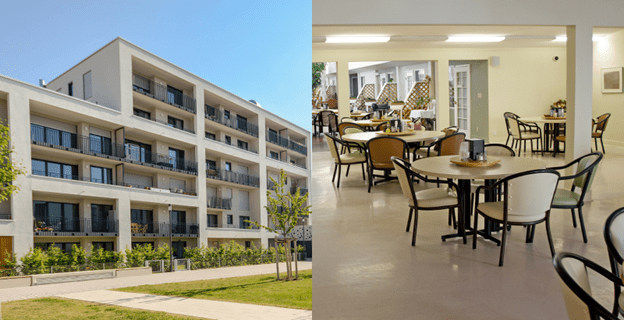
Senior housing is any residence that accommodates older residents’ needs. It can take many forms, from independent apartments in a community to rooms in a facility that provides round-the-clock care. Senior housing and assisted living real estate is one of five major investment opportunities created by aging populations, with demand for new senior housing units in the United States set to surge through 2035. In fact, the U.S. senior housing industry is poised for “unprecedented” growth.
TYPES OF SENIOR LIVING OPTIONS
Here is a general overview of the most common types of senior living options available:
 1) Age-Restricted Communities
An age-restricted community is exactly what it sounds like; a housing community that is restricted to certain persons depending on their age. These communities are often gated, country club–style neighborhoods made up of single-family homes or townhomes designed specifically for older adult living.
Age-restricted communities are actually a specific category of senior living designated by the U.S. Department of Housing & Urban Development (HUD) in the Fair Housing Act; this act says that at least one person in the home must be 55 years of age or older in at least 80% of the homes. A typical example of age-restricted communities is 55+ communities. Health care services are not provided to residents in this type of community.

2) Independent Living
Independent living senior communities are designed to enable healthy, independent older adults to enjoy a lifestyle filled with recreational, educational, and social activities with others around the same age. These communities are often age-restricted with no health care services provided. Independent living communities are apartment-style units meant to provide living space and amenities for senior adults.
These are often one- to two-bedroom apartments, complete with kitchens and laundry facilities. Residents can come and go as they please, cook their meals, and care for themselves while receiving the social benefits of living in a community with other senior adults. Various services are provided to the residents like; meals, housekeeping, transportation, laundry, fitness classes, and social activities.

3) Assisted Living
Assisted living facilities to provide a special combination of residential housing and supportive health care services to adults for whom living alone or independently is no longer safe. Residents of assisted living facilities typically need additional, but limited assistance with meals, bathing, and medication.
Assisted living facilities have multiple private units meant to house residents who are disabled or unable to live independently. In addition to coordinating visits from outside health care providers, assisted living programs provide supportive services to residents. These can include the following; meals, laundry, housekeeping, medication reminders, assistance with bathing, grooming, eating, shopping, and managing money.

4) Skilled Nursing Facilities / Nursing Homes
Skilled Nursing Facilities, commonly referred to as nursing homes, are a senior living option that provides 24-hour nursing care for those who need more direct daily care than is provided in a supportive, assisted living type of arrangement. Typically, these facilities also have specialized care and housing tailored to the special needs of individuals with Alzheimer’s, dementia, or related diseases.
Skilled nursing facilities have licensed nursing staff 24 hours a day for patients requiring care and supervision. Often, these facilities offer rehabilitation and other specialized services to those recovering from an accident, surgery, or other health issues. These services could include the following; physical therapy, speech therapy, occupational therapy, social services, and medications.

5) Memory Care
Memory care facilities are licensed health care facilities that specialize in caring for senior adults living with Alzheimer’s disease, dementia, and other cognitive impairments. These facilities exist to provide an assisted living environment for their residents to continue to live engaged, social and active lifestyles while on-site nursing staff meets their physical and emotional needs.
Residents typically receive services that include the following; activity planning to stimulate cognitive abilities, meals, assistance with personal care and medications, transportation, exercise programs, housekeeping, and laundry.

6)Continuing Care Retirement Communities
Continuing Care Retirement Communities (CCRC) are a different type of retirement community that provides seniors with the full spectrum of lifestyle and health care options; from independent living, and assisted living to skilled nursing care, all on one campus. CCRC contract types vary, with some providing all-inclusive “Life Care” guarantee of health care services to residents and others providing health care and other services a la carte or “fee for service.”
WHY INVEST IN SENIOR HOUSING?
Though it has risks, there are also many benefits to investing in senior housing. In the U.S., the average life expectancy is 78.8 years, due to improvements in health care and medicine. Antibiotics, vaccines, and medications that manage long-term conditions help people live longer and healthier lives.
As a result, the number of seniors is rising, and the demand for designated housing arrangements with amenities that serve this population is growing. By 2034, the number of people over age 65 will outnumber the number of children under age 18 for the first time.
BENEFITS OF INVESTING IN SENIOR LIVING
If you are considering investing in a retirement home or other senior housing, there are many benefits.
1) It is needs-based:
Often, when investing in real estate, the goal is to earn income from tenants. Senior housing is often needs-based, meaning the people who live there rely on the services and amenities it provides. Senior housing and care is the only commercial real estate asset class that experienced positive asking rent growth during the Great Recession. Rent growth has been steadier, less volatile, and has generally exceeded that of other commercial real estate property types.
2) It is relatively recession-resistant:
Some investments rise and fall in value based on the overall economy. For example, the COVID-19 pandemic adversely affected the luxury rental market but led to an uptick in demand for residential home sales.
Older adults will always need housing, making investing in assisted living facilities and other types of senior housing relatively stable. Senior housing shows high rates of annual returns at the three-year, five-year, and 10-year points. Even amid the Great Recession between 2007 and 2009, the demand for senior housing remained high.
3) It has growth potential:
The number of older adults in the population is increasing each year. Changes associated with aging, such as a loss of mobility or the development of chronic illnesses, can mean that more and more people are likely to look into moving to senior housing at some point in their lives.
HOW TO INVEST IN SENIOR LIVING FACILITIES
Investing in a retirement home or assisted living facility doesn’t mean you need to purchase the entire property independently. Several options are available for senior living investment.
1) Invest in a Real Estate Investment Trust
A REIT is a company that lets investors pool money to purchase a property. REITs can take many forms. Some buy properties to rent to tenants, while others actively develop land and manage properties. As an investor in a REIT, you wouldn’t be solely responsible for managing the property. A REIT can be a good option for an investor who’s looking to passively get involved with real estate or for an investor who doesn’t have a high net worth.
2) Convert an Existing Property
Another option for investing in a senior living facility is to convert a property you already have in your portfolio to an assisted living facility or senior co-housing. You can hire a separate company to manage the facility’s day-to-day operations, making the investment relatively hands-off. Alternatively, you can rent the property to a company that owns and manages retirement homes, allowing the other party to take on liability and responsibility for the senior housing.
3) Purchase an Existing Facility
Depending on how much you have to invest and how involved you’d like to be with the investment, you can invest in senior housing by purchasing a community or facility that already exists. Purchasing an existing senior living community might be the most direct way to invest in senior housing. You’ll have control over the facility’s operation and will also assume responsibility for any liabilities.
As informed investors we should understand the risks associated with real estate investing and that there is no guarantee. Please do your due diligence.