The fair market value of a property is the amount you would get if you sold it privately today. This value is crucial for determining your apartment’s equity and investment potential and selling considerations. You must first ascertain the fair market value if you intend to sell, refinance, or borrow against your house or its equity. On the other hand, if you want to purchase an apartment soon, determining the property’s fair market value beforehand might help you avoid overpaying or enable you to find a fantastic deal.
How To Appraise The Fair Market Value Of An Apartment
-
Income Approach
The source of the revenue must be taken into account because the income technique largely relies on the rental income of the commercial real estate. varied forms of commercial real estate require a varied weighting of the revenue strategy.
The revenue strategy works well for a sizable apartment complex. Multiple tenants balance out the risk of vacancy, decreasing rental revenue swings despite shifting economic conditions.
The income technique may be used to evaluate a strip mall and anchor store retail center as long as the anchor space drives customers to other businesses. But what if the anchor location remains empty for months on end or if it draws a demographic that doesn’t frequent the other stores?
When determining the value of a business property, the income approach becomes less trustworthy the more erratic the rental revenue is.
-
Comparison Approach
Any evaluation must consider the sales costs of nearby properties in great detail. You may discover some advice on how to determine the selling price of a business property in this province.
1. Public Records
The sales prices for real estate transactions are openly available in all states with the exception of a dozen or so. You must go to the local county’s courthouse to find the necessary documents because the majority of county offices’ websites have restricted online search capabilities.
However, this kind of search might take a while if you want to compare sales data for a lot of different homes.
No records of sales data are accessible for public scrutiny in the about a dozen “non-disclosure” states and select counties of the other states. And using public information to estimate the sales price of a home in one of these states is a best-case scenario.
The back-door method used in non-disclosure states to determine a property’s sales price is based on using public tax information. The county assessor can provide you with the property’s assessed value.
And the market value may be calculated using this value. But since county assessments are frequently out of step with actual market values, such a valuation is at best an approximate approximation.
2. Websites for commercial real estate
Searching through public documents is far less convenient than conducting research online. Several internet listing sites also display the asking prices for commercial real estate that is currently on the market.
To quickly and easily uncover the asking prices of commercial properties that are currently for sale, visit Officespace.com. However, there is no pricing for recently sold properties on officespace.com.
Although knowing the asking prices of nearby buildings might assist you in estimating your building’s value, actual sales data is a better indicator of value.
Officespace.com and LoopNet.com are both listing websites. However, Loopnet.com offers a larger selection of properties offered as well as some improved commercial real estate marketing data.
When using a website like CoStar.com, you will have to pay for genuine sales data. The parent firm of LoopNet.com, CoStar.com, is one of the biggest commercial real estate platforms, offering services in the US, the UK, and Canada.
In addition to their other services, they also offer a huge database that includes sales comps and lease comps for recently sold homes, making them the most costly real estate data supplier.
- Cost Approach
The cost approach’s basic assumption is that purchasers won’t pay more for an existing home than it would cost to create a brand-new, comparable home.
Unlike the other two prevalent methodologies, the cost method does not employ comparable properties to value the building, therefore the computations are independent of the status of the real estate market. On the other hand, comps are used to appraise the land.
Conceptually, the cost method for property evaluation is straightforward:
Property value is equal to Land Value + (New Building Cost – Accumulated Depreciation).
But if the structure is older and the building materials are no longer widely utilized, the calculations might become quite difficult. The cost technique produces the market value for new (or almost new) buildings that is the most accurate.
1. How to Assess Commercial Land Value
Utilizing comparables of previously sold lots is the most popular technique for determining the value of the property.
When the information is available, the value of the land can also be estimated using new development that is of comparable value to your property. Find the building’s value using the cost approach. To get the estimated land value, deduct this amount from the overall project cost.
2. How to Calculate New Cost
Calculate the cost of constructing a building from scratch by replacing the current structure with one that is comparable in size and purpose.
Such a computation is simple when the materials are identical. For instance, it is simple to calculate the cost of constructing a brand-new, four-story, brick office building to replace an existing one that is twenty years old.
However, the computation gets challenging, if not impossible, when the materials are different. As an illustration, a cut-stone structure with a slate roof that is 120 years old has been transformed into an office building.
What would the new price be? (Surely higher than what the majority of people wanting to buy an office building would be ready to pay.)
Four techniques are employed to determine the price of a replacement or a replica (such as a historic structure) at current prices:
- Utilizing comparative units. calculating the price per square foot based on an all-materials lump-sum estimate.
- Approach to Segregated Costs. dividing up the budget by assigning a price to each of the significant elements, such as the roof system.
- Unit-in-Place Methodology. Pricing the minor components of each main component, such as the decking and structural elements of the roof system, will further break down the estimate.
- Quantitative Survey Method. Even more dissecting the estimate by assigning a price to each component of the structure, much like a contractor submitting a bid could.
-
Depreciation Calculation
A building’s depreciated value is equal to its cost at construction less any deductions for loss of value.
There are three ways in which value might be lost:
- Physical
- Functional
- External
Physical degradation results from normal wear and tear caused by habitation. If maintenance is skipped, a Class A apartment complex might swiftly revert to a Class B structure.
However, in principle, a Class A apartment building might continue to be Class A eternally if kept in brand-new condition and upgraded regularly with the most recent technology.
As a building’s functionality ages or becomes outdated, functional depreciation is calculated. As an illustration, an old apartment building with basement laundry facilities, no elevator, and significant functional depreciation.
Negative circumstances in the community or the local economy cause external devaluation. For instance, the external depreciation of surrounding office buildings increases dramatically when a business headquarters in a city close.
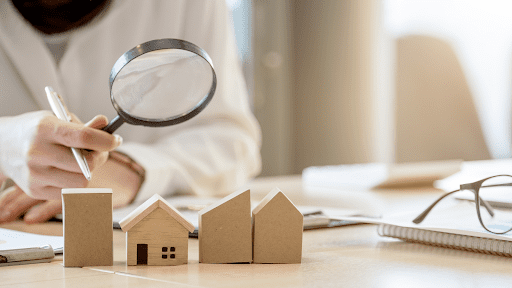
5 Steps on How to Conduct a Commercial Appraisal
-
Obtain an Inspection
You must arrange for a business property examination before you can move forward.
Your licensed appraiser will check public ownership and zoning records, look at the demographics of the area, assemble comparable sales, and more. All of this important data will then be examined to produce a report that describes the inspection’s results.
-
Don’t Invent False Information
Honesty is essential to the commercial evaluation process, despite the temptation to exaggerate data. It doesn’t pay to invent facts, since the appraiser will constantly try to corroborate any assertions you have made. You risk losing credibility as a source of information even with a tiny lie.
-
Avoid Hiding Information
Being open and honest is also helpful in a commercial evaluation.
You can be requested supporting evidence, such as income tax returns, property tax bills, or other necessary records. It is not in your best interests to withhold information since appraisers must uphold client confidentiality.
The appraisers will be able to do their work more swiftly and completely if you abide by their demands for supporting paperwork.
-
Be Specific About the Objective
Commercial appraisals may be required for a variety of reasons, including property purchases and challenges to property tax increases.
Tell the appraiser about your interest in the property and your intended purpose for the report before the process starts. This will enable them to specifically adapt the report to meet your objectives. Additionally, it will enable them to specify who among the parties would be permitted to examine and utilize the final business evaluation.
-
Establish the preferred valuation date.
Since the price of commercial real estate constantly changes over time, it’s crucial to establish a date of value. The market value of your property could be overstated or understated by a valuation that is taken out of context.
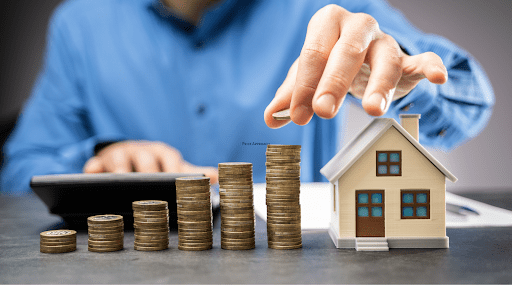
Three options for the valuation date
- Inspection date
- A retrospective evaluation
- An evaluation that is prospective
CONCLUSION
For mortgage lenders, investors, insurers, purchasers, and sellers of real estate, accurate real estate valuation is crucial. While qualified experts often carry out assessments, everyone engaged in a real transaction can advantage from learning the fundamentals of the many approaches to real estate valuation.
As informed investors, we should understand the risks associated with real estate investing and that there is no guarantee. Please do your due diligence.
How can I find comparable sales data for apartments?
Comparable sales data can be found through various sources such as online real estate portals, local property records, and real estate agents. These sources provide information on recently sold apartments in the same area that are similar in size, amenities, and condition. Utilize these resources to gather data and compare it to the property you are appraising.
What factors should I consider when assessing the condition of an apartment?
When assessing the condition of an apartment, consider factors such as the condition of the flooring, walls, appliances, and fixtures. Take note of any recent upgrades or renovations as they can positively impact the property’s value. On the other hand, outdated or poorly maintained apartments may have a lower fair market value.
How do amenities and facilities affect the fair market value of an apartment?
Amenities and facilities can add value to an apartment. Features like parking spaces, elevators, swimming pools, fitness centers, and security systems are attractive to potential buyers or renters. Assess the quality and availability of these amenities and compare them to similar properties in the area. Apartments with desirable amenities often have a higher fair market value.