
As Arlington was the 10th most expensive city for apartment units out of 100 major U.S. cities, the community’s rate of growth in apartment rent prices month over month for April was more than double the national average.
What Is Arlington’s Typical Rent?
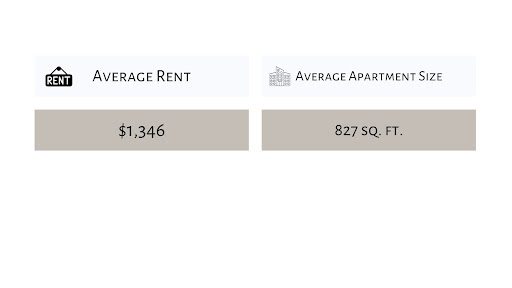
Arlington’s average monthly apartment rent is $1,346. Rent prices vary according to a number of variables, such as location, size, and quality.
What Is The Typical Size Of An Apartment In Arlington?
The average apartment size in Arlington, Texas is 827 square feet, but there are both affordable and upscale possibilities for both houses and apartments. The smallest and least expensive apartments are studios, 1-bedroom apartments are more typical, 2-bedroom apartments and 3-bedroom apartments have more square area.
However, like the rest of the country, Arlington is experiencing a rising problem with apartment vacancies, which might get worse as more new housing stock enters the market. More inventory is coming on board, so it’s unclear how the market will develop going forward. The typical apartment rent in Arlington increased by 1.7 percent from April to May, which is more than quadruple the national growth rate.
What Parts Of Arlington Are The Most Reasonably Priced?
The three communities in Arlington with the lowest average rent prices are Arlington Estates, Arlington Manor, and Arlington Terrace. In Arlington Estates, renters pay $1,229 per month on average. Check out the listings from Brazos Park ($1,229), Broadmoor ($1,229), and Brookview ($1,229) if you’re searching for even better bargains, as their asking rates are less than the $1,346 monthly average rent in Arlington.
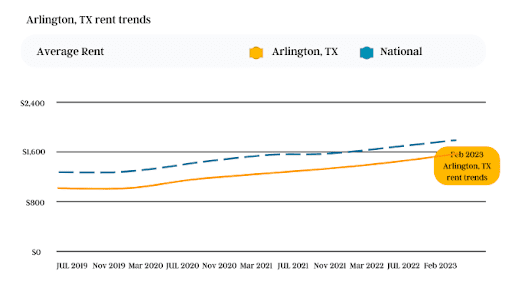
Arlington’s median apartment rental rate has increased 4.5 percent during the past year and 6.8 percent since the epidemic began in the spring of 2020. Arlington’s median rental price for April was 12.2% higher than the metro area’s average.
With rents almost online with San Francisco, Arlington is currently the tenth most expensive city in the US. Irvine, California, had the highest cost in April ($3,028), while Cleveland had the lowest median rental price ($796). Throughout 2021, the national median rent rose by a record-breaking 17.6 percent as the market stabilized after the initial COVID blast upended daily living. On a national level, however, the annual growth rate of apartment prices is continuing to slow down; the current pace is the lowest since March 2021.
The experts observed that “year-over-year growth is now below the average rate from 2018 to 2019 (2.8%), and it is likely to decline even further in the months ahead,partly because of a sizable inventory of new units that are still being built. When that flood of brand-new housing materializes, “some property owners may start struggling to fill vacancies for the first time since the early stages of the pandemic,” researchers said.
In 69 of the 100 locations, rents rose month over month in April, compared to 83 cities where prices rose in March. 40 of the top 100 cities are currently experiencing negative year-over-year growth, up significantly from the 28 cities a month earlier.
The Midwest was home to all three of the metro areas with the fastest year-over-year rent growth in April. Cincinnati is in first place, with prices there rising 5.8 percent year over year. Chicago is second, with a rise of 5.6 percent, and Indianapolis is third, with a rise of 5.4 percent. Formerly booming Sun Belt markets are now losing some of their prior gains; Phoenix, Austin, and Las Vegas, for example, are now experiencing decreases.
Only San Francisco, out of the 52 metro areas in the country with populations of over a million, still has apartment rents below pre-COVID levels (down 3%), and only San Jose and Minneapolis have growth rates since early 2020 in the single digits (2% and 5%, respectively). The national apartment vacancy rate peaked in the summer of 2021 at 4.1 percent, but it has since risen to 6.8 percent, which is roughly in line with pre-pandemic averages.
Prices may not fall further, but they are also unlikely to increase significantly, given the impact of fresh inventory on many markets.
As informed investors, we should understand the risks associated with real estate investing and that there is no guarantee. Please do your due diligence.